
Through support from H‑E‑B, EarthShare Texas hosts the Green Leaders Fellowship annually: a program designed to cultivate emerging environmental professionals through hands‑on experience, strategic mentorship, and mission‑driven placements across the state.
This blog series highlights the work of our 2025 Fellows, showcasing the research, storytelling, and advocacy they contributed to their individual host organizations. From policy analysis to community engagement, each fellow brought a unique lens to the environmental challenges facing Texas today.
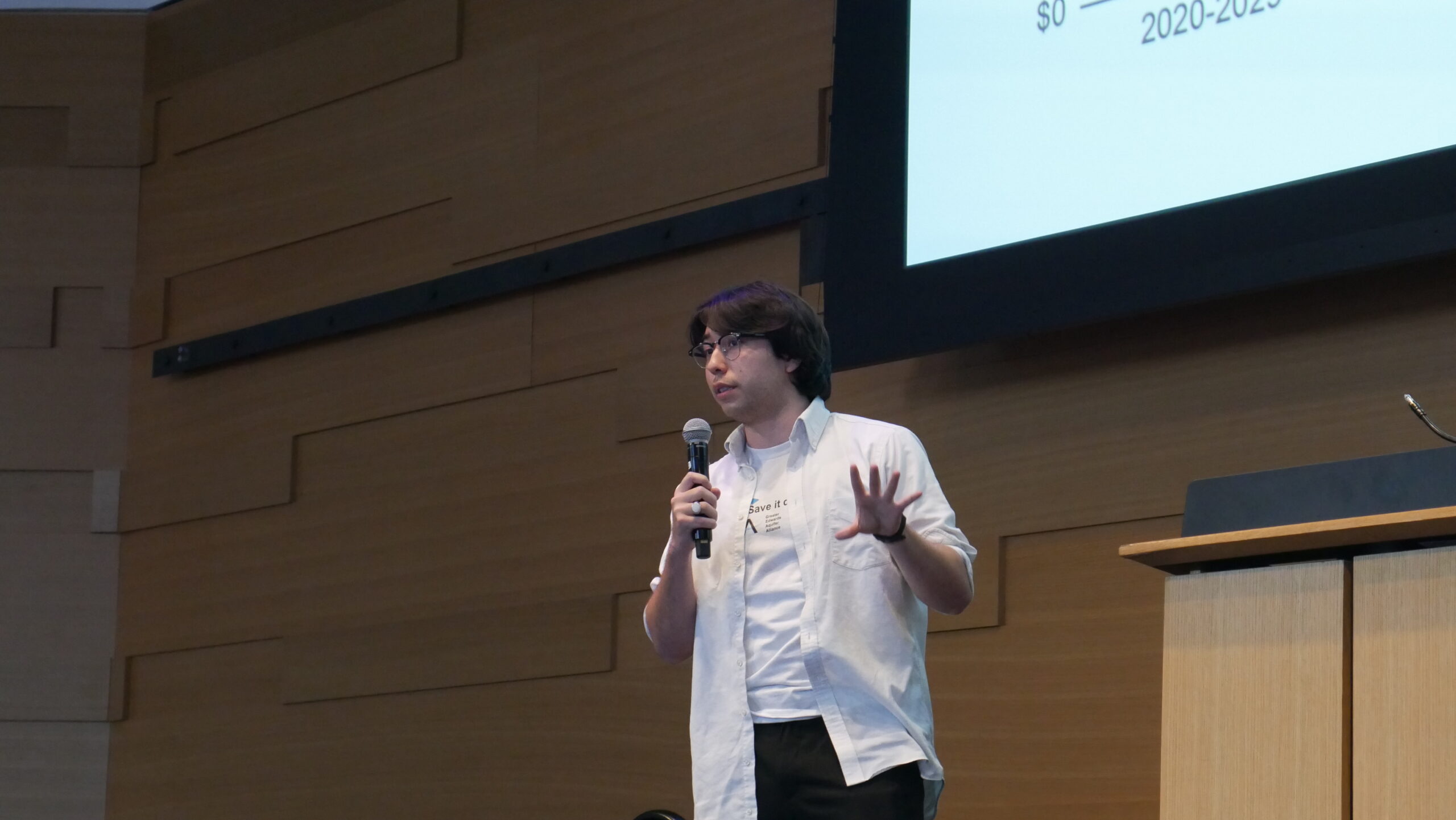
- Fellow Spotlight: Javier Lopez
- Host Organization: Greater Edwards Aquifer Alliance (GEAA)
- Focus Area: Legislative engagement and comprehensive policy analysis of Texas’ widening water supply gap.
A Fellow Drawn to Systems-Level Impact
Javier entered the fellowship with a strong interest in environmental policy and a desire to understand how statewide decisions shape long‑term water resilience. At GEAA, he gained direct exposure to the legislative process — from delivering support and opposition cards for key bills to tracking how proposed legislation could influence Texas’ water future.
This hands‑on experience informed his central project: a policy paper examining the state’s current water crisis, the projected supply‑demand gap, and the consequences of failing to strengthen infrastructure and sustainability measures. His work combined legislative observation with deep data analysis, giving GEAA a clearer picture of the challenges ahead.
Understanding the ‘Widening Gap’
A major component of Javier’s research focused on what’s referred to as the state’s “widening gap” — the growing divergence between Texas’ available water supply and its rapidly increasing demand on the state’s water supply.
Drawing from the Texas 2036 Infrastructure Report, he analyzed projections showing a steep and expanding deficit. Even without accounting for new legislation, Texas is on track to face a $110 billion infrastructure gap between 2040 and 2080.
He also highlighted a projected 5 million acre‑foot water deficit by 2070, a shortfall equivalent to the annual water use of approximately 13 million households. Converting acre‑feet into household equivalents helped illustrate the scale of the challenge in more relatable terms. He presented an overview of his research and findings as part of GEAA’s Water Wonks Monthly Lecture Series in 2025, which you can find and watch here.
A Closer Look at Senate Bill 7
During his time at GEAA, Javier closely followed Senate Bill 7, a major water infrastructure proposal. His analysis recognized the bill as an important early step in addressing Texas’ water needs, but also identifies areas where it falls short.
SB7 places significant emphasis on developing new water sources, such as brackish groundwater. However, it does not prioritize improvements to existing infrastructure or substantial expansion of water reuse — two strategies that could significantly reduce waste and extend the life of current supplies.
Reuse, in particular, remains underutilized. Even with a projected 15 percent increase over the coming decades, it still represents only a small portion of Texas’ future supply portfolio.
What Happens When Demand Outpaces Supply
Javier’s research also explored the real‑world consequences of failing to meet water demand. When communities exceed their available supply, the impacts can be far‑reaching: economic slowdowns, increased boil‑water notices, and disruptions to industries such as agriculture and manufacturing.
He also examined drought‑related economic losses, comparing projected impacts to major recession periods such as 2007 and the COVID‑19 downturn. The analysis underscores how unprepared infrastructure can magnify the effects of drought, turning environmental stress into statewide economic strain.
Where Texas Can Close the Gap
Despite the challenges, Javier identified several promising opportunities to reduce the gap between supply and demand.
1. Investing in Infrastructure
Texas’ aging water systems are a major source of loss. According to the EPA’s 2023 Drinking Water Infrastructure Needs Assessment, the state faces $73.7 billion in drinking water infrastructure needs between 2021 and 2040.
A Texas Living Waters analysis further illustrates the issue: in 2020 alone, Texas lost enough water through leakage and system failures to supply Laredo, El Paso, Lubbock, Fort Worth, and Austin combined.
2. Expanding Non‑Potable Water Reuse
Industries such as aggregate mining — which uses large volumes of water to cut and crush rock — represent significant opportunities for non‑potable reuse.
Javier developed a graphic comparing water use in aggregate mining to the household needs of cities like Arlington and Lubbock. The comparison shows that this single industry uses more water than some major Texas cities, highlighting the potential benefits of shifting even part of that demand to greywater sources.
3. Improving Outdoor Irrigation Efficiency
Outdoor irrigation is another area where targeted strategies can yield substantial savings.
Using data from Water Conservation by the Yard and municipal water cost analyses, Javier modeled the potential net savings for Texas communities under both low‑effort and high‑effort irrigation strategies. These approaches reduce strain on infrastructure, lower consumer bills, and decrease energy use associated with water treatment and distribution.
A Fellow Shaping the Future of Texas Water Policy
Even though his work as a Fellow has ended, Javier’s work provides GEAA with a clearer understanding of the challenges — and opportunities — shaping Texas’ water future. His policy paper will serve as a resource for advocates, legislators, and community leaders working to strengthen statewide water resilience.
Through the Green Leaders Fellowship, EarthShare Texas continues to support emerging leaders like Javier who are ready to tackle the state’s most urgent environmental challenges — and help build a more sustainable future for all Texans.
This blog post is the fifth in a series from EarthShare Texas dedicated to highlighting our 2025 Green Leaders Fellows. Read the other spotlights here: